The Mazar-i-Sharif Massacre: 2,000-20,000 (aug 8, 1998 – aug 11, 1998)
Description:
The Mazar-i-Sharif Massacre was carried out by the Taliban (newly installed Taliban governor Mulla Manon Niazi and Taliban forces including Pashtuns from Balkh who had switched sides to the Taliban) against the Hazara Shia ethnic and religious minority, along with some Tajiks and Uzbeks in Mazar-i-Sharif, northern Afghanistan between August 8, 1998 (Taliban capture of the city) and late August 1998 (approximately 2-3 weeks of systematic violence), with an estimated death toll between 2,000 (Human Rights Watch and UN conservative estimates, with HRW stating actual numbers "may be much higher") and 10,000-20,000 (higher estimates from local Afghan sources, former parliament members, and Hazara communities, with some sources claiming 8,000-12,000 killed).Taliban forces engaged in a "killing frenzy" (described by witnesses) shooting "anything that moved" including civilians, shopkeepers, cart pullers, women, children, and animals in the first hours of capturing the city, systematic house-to-house searches targeting male Hazara, Tajik, and Uzbek civilians for execution, summary executions (scores or hundreds of Hazara men and boys killed to prevent resistance, with victims having throats slit in front of families or shot by firing squads), forced religious tests (ordering residents to recite Sunni prayers to prove they were not Shia, identifying and targeting Hazaras), mass detention in overcrowded jail (thousands held in Mazar-i-Sharif central jail with one well and two toilets), transport of prisoners in sealed metal shipping containers to Shiberghan 130km away (in two documented cases nearly all 100-150 prisoners in each container died from asphyxiation or heat stroke), mass graves and burial alive, use of tanks to run over victims, shooting people in the testicles, execution at the tomb of Hazara leader Abdul Ali Mazari (killed while in Taliban custody in 1995), abduction of girls and women from Hazara neighborhoods (particularly Saidabad, Karte Ariana, Ali Chopan), systematic rape (Balkh Pashtuns identified in some cases), torture, arbitrary detention, forced conversion to Sunni Islam or death, killing of eight Iranian diplomats and one journalist at Iranian consulate, prohibition of burying corpses for six days (violating Islamic burial requirements while bodies rotted in summer heat and were eaten by dogs), and genocidal speeches by Governor Niazi threatening Hazaras to "become Sunnis, leave Afghanistan, or risk being killed."
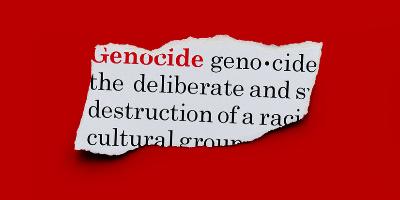
It has been labeled as genocide or potential genocide by numerous Hazara advocacy organizations including the Hazara Committee UK (which submitted evidence to UK Parliament urging recognition of the "Taliban massacre of the Hazaras in the 1990s" as genocide), Hazara diaspora activists worldwide campaigning for genocide recognition, legal scholars and researchers who argue the systematic targeting, explicit intent stated by Taliban leaders, and scale of killing meet UN Genocide Convention criteria, the Hazara Research Collective (which submitted evidence stating the massacre amounted "to genocide under international law" with "over 8,000 Hazaras systematically killed"), academic analyses placing the massacre within the continuum of Hazara genocide spanning from the 1890s Abdur Rahman Khan campaigns through Taliban and ISIS atrocities, and human rights advocates who characterize Taliban violence against Hazaras as genocidal persecution.
However, formal international genocide recognition has been extremely limited or nonexistent. Human Rights Watch documented extensive war crimes and crimes against humanity but stops short of using the term "genocide" in official reports.
Amnesty International similarly documented massacres without genocide classification. The UN has not formally labeled the Mazar-i-Sharif massacre as genocide, though UN reports documented mass atrocities. No country has made official genocide determination. The massacre received minimal international attention at the time (August 1998), with media focused on U.S. cruise missile strikes against Osama bin Laden targets in Afghanistan following the East Africa embassy bombings. No Taliban leaders or perpetrators have been prosecuted or held accountable for the massacre.
The lack of investigation, documentation, and accountability demonstrates how atrocities against marginalized minorities can be systematically ignored by the international community.
Context and the 1997 Taliban defeat:
The 1998 massacre must be understood as retaliation for Taliban's humiliating 1997 defeat in Mazar-i-Sharif. In May 1997, Taliban attempted to capture the city but were betrayed by General Abdul Malik Pahlawan and trapped. Hundreds of Taliban were killed in streets, and at least 2,000 Taliban prisoners were summarily executed by General Malik and Hazara Hizb-i Wahdat forces, with bodies dumped in wells or left in desert. However, Taliban Governor Niazi deliberately targeted Hazaras for revenge despite acknowledging he "knew very well" it was Uzbeks who killed Taliban prisoners—revealing explicit ethnic/religious targeting rather than legitimate military retaliation.
The systematic nature of the killing:
Witnesses described Taliban entering at 10am August 8, driving pickup trucks through narrow streets shooting everything that moved for two days. Taliban then conducted systematic door-to-door searches ordering residents to prove they weren't Shia. Those identified as Hazara were executed on the spot, with families forced to watch. Dozens or hundreds were executed at Abdul Ali Mazari's tomb. Thousands were detained in the city jail which became catastrophically overcrowded, then loaded onto metal shipping containers for transport—many dying horrible deaths from asphyxiation before reaching destination. The Taliban closed the city to journalists, foreigners, and humanitarian organizations ensuring no witnesses to document the genocide.
Ongoing Hazara persecution:
The Mazar-i-Sharif massacre represents one event in centuries of Hazara genocide. King Abdur Rahman Khan killed 62% of Hazara population in 1890s campaigns. The 1998 massacre and similar killings in Bamiyan killed over 8,000-10,000 total. Since 2001, ISIS-K has declared war on Shia Muslims, conducting dozens of suicide bombings targeting Hazara mosques, schools, maternity hospitals, and weddings. The 2021 Taliban return to power renewed fears of genocide, with Hazara communities facing forced displacement, arbitrary detention, and targeted killings. Twenty-seven years after the massacre, families still await justice with no accountability—demonstrating that genocide unpunished enables ongoing persecution.
Added to timeline:
Date:
aug 8, 1998
aug 11, 1998
~ 3 days