The Abyssinian War: 120,000-200,000 (may 1, 1935 – apr 1, 1937)
Description:
The Second Italo-Ethiopian War (also known as the Ethiopian War, Abyssinian War, or Italian Invasion of Ethiopia) was carried out by Fascist Italy (under dictator Benito Mussolini) including the Italian Army, Italian Air Force (Regia Aeronautica), Italian colonial troops from Eritrea and Italian Somaliland, and Somali dubats (irregular frontier troops) under Italian command against the Ethiopian Empire (Abyssinia) and its people between October 3, 1935 (Italian invasion without declaration of war) and May 5, 1936 (capture of Addis Ababa and formal annexation, though Ethiopian resistance and Italian occupation continued until May 5, 1941 when British and Ethiopian forces liberated the country), with an estimated death toll between 382,800 (Ethiopian government official figure submitted to the 1946 Paris Peace Conference) and 760,300 (upper estimate from Angelo Del Boca citing 1945 Ethiopian memorandum to Conference of Prime Ministers).Fascist Italy also engaged in systematic use of chemical weapons including mustard gas (at least 500 tons deployed through aerial bombardment and artillery shells in violation of the 1925 Geneva Protocol, targeting combatants and civilians at locations including Tekeze, Ambalage, Borena, Sekota, Mekele, Debre Tabor, Korem, and Ashengie), bombing of Red Cross hospitals and ambulances (including Ethiopian Red Cross hospital in Dessie, Swedish Red Cross hospital in Melka Dida, and a Red Cross Fokker aircraft), mass executions and massacres (including Yekatit 12 massacre in Addis Ababa February 19-21, 1937 killing 19,200-30,000 people as reprisal for attempted assassination of Viceroy Rodolfo Graziani, and Debre Libanos Monastery massacre May 18-22, 1937 killing 1,700-2,100 including all 297 monks), aerial bombardment of civilian populations (17,800 women and children killed by bombing according to Ethiopian government), establishment of concentration camps where 35,000 died (including camps at Danane and Nocra), summary execution of prisoners of war (Mussolini ordered killing all prisoners and extermination of "complicit population"), torture and mutilation of prisoners, village destruction and scorched earth campaigns (2,000 Ethiopian Orthodox churches destroyed and 525,000 houses burned), confiscation and slaughter of livestock causing mass starvation (6 million cattle, 7 million sheep and goats, 1.7 million horses/mules/camels killed, plus environmental disaster from poison gas contaminating land, leading to 300,000 deaths from privation), forced labor, looting of cultural treasures including the Obelisk of Axum torn from its site and sent to Rome, systematic targeting of Ethiopian Orthodox Church institutions and clergy, racist colonial policies and experiments with racial laws, and complete subjugation of Ethiopia into Italian East Africa alongside Eritrea and Italian Somaliland.
275,000 Ethiopian soldiers killed in combat
78,500 Patriots killed during the resistance/occupation (1936-1941)
17,800 women and children killed by Italian aerial bombing
30,000 people killed in the Yekatit 12 massacre (February 1937)
35,000 people died in Italian concentration camps
24,000 Patriots killed following summary court proceedings
300,000 people died from starvation after village destruction
Total: 760,300 deaths attributable to Italian invasion and occupation
The Yekatit 12 massacre occurred February 19-21, 1937, as reprisal for an attempted assassination of Viceroy Rodolfo Graziani. Italian forces and Libyan colonial troops under Italian command went on a killing spree in Addis Ababa, slaughtering between 19,200 (according to a 2017 study) and 30,000 Ethiopians (according to various estimates). One-fifth of the capital's population was murdered in three days of systematic violence.
The Ethiopian Orthodox Tewahedo Church was especially targeted. Between May 18-22, 1937, Italian and Libyan troops under General Pietro Maletti massacred between 1,700 and 2,100 people at Debre Libanos Monastery, including all 297 monks, 23 lay people serving the monastery, and hundreds of pilgrims who had come to celebrate the monastery's patron saint. This represented the complete annihilation of one of Ethiopia's most important religious institutions.
Italian forces destroyed 2,000 Ethiopian Orthodox churches and 525,000 houses throughout the occupation. They confiscated or slaughtered 6 million cattle, 7 million sheep and goats, and 1.7 million horses, mules, and camels. This systematic destruction of livestock and agricultural infrastructure caused widespread famine, with 300,000 Ethiopians dying from privation according to Ethiopian government figures.
Concentration camps were established at Danane, Nocra, and other locations where 35,000 Ethiopians perished from deliberate starvation, disease, overwork, and direct killing. The conditions in these camps paralleled those of Nazi concentration camps that would soon proliferate across Europe. Thousands more Ethiopians were imprisoned, tortured, and executed following summary trials or no trials at all.
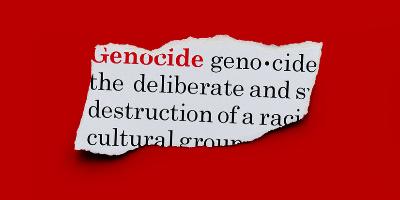
It has been labeled as genocide or constituting genocide by some historians (according to Wikipedia noting "hundreds of thousands of Ethiopian civilians died as a result of the Italian invasion, which have been described by some historians as constituting genocide"), genocide scholars including Leo Kuper (who described the 1939 Ametsegna Washa/Cave of Zeret mustard gas massacre killing over 5,500 Ethiopians as a "genocidal massacre"), scholars in the Journal of Cultural and Religious Studies (2018 article documenting Italian war crimes including "genocide, torture, poisoning of water and killing thousands of peoples"), Italian anti-fascist historian Angelo Del Boca (whose 1991 book "Le Guerre Coloniali del Fascismo" condemned "arbitrary acts, abuses of power, crimes and genocides" of Italian colonialism), scholars who examine Italian atrocities as meeting criteria for genocide under international law given the systematic nature and intent to destroy Ethiopian resistance, genocide studies literature which increasingly frames Italian actions as having genocidal character, and academic papers analyzing the war within genocide frameworks.
However, the classification as genocide in the strict legal sense remains contested and limited, with most official designations using terms like "war crimes" and "crimes against humanity" rather than genocide, and no countries having formally recognised it as genocide.
The characterisation continues to be debated among scholars, particularly regarding whether the atrocities represent systematic genocide with intent to destroy Ethiopians as a group versus war crimes and crimes against humanity with genocidal dimensions committed during colonial conquest.
Italy has never acknowledged these events as genocide, and few Italian war criminals faced prosecution after World War II.
Added to timeline:
Date:
may 1, 1935
apr 1, 1937
~ 1 years and 11 months