The Holocaust: 17 Million (jan 1, 1933 – jan 1, 1945)
Description:
The Victims:6 Million Jews
5.7 Million Soviet Civilians
1.8 Million Poles
500,000-1 Million Roma
312,000 Serbian Civilians
250,000 Disabled people
70,000+ Others
The Holocaust (known in Hebrew as the Shoah, meaning "Catastrophe") was carried out by Nazi Germany (under Adolf Hitler and the Nazi Party/NSDAP) and its Axis allies and collaborators including Vichy France, Fascist Italy, the Independent State of Croatia (Ustaše), Romania (under Ion Antonescu), Hungary, Slovakia, and numerous local collaborators across occupied Europe against the Jewish people of Europe between 1941 (beginning of systematic mass murder with Operation Barbarossa invasion of Soviet Union in June 1941, though persecution began in 1933) and May 8, 1945 (end of World War II in Europe), with an estimated death toll between 5.4 million (lower scholarly estimates) and 6 million (consensus figure used by United States Holocaust Memorial Museum, Yad Vashem, and international Holocaust scholars), representing approximately two-thirds of Europe's Jewish population and one-third of the world's Jewish population.
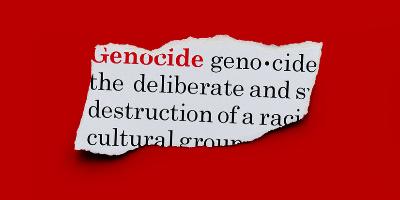
Nazi Germany and its collaborators also engaged in mass shooting operations by Einsatzgruppen mobile killing units (1.5-2 million Jews murdered in "Holocaust by bullets"), systematic murder in gas chambers at six extermination camps (approximately 2.7 million Jews murdered at Auschwitz-Birkenau, Treblinka, Belzec, Sobibor, Chełmno, and Majdanek), forced ghettoization with starvation and disease (800,000-1,000,000 deaths), forced labor in over 40,000 camps including concentration camps and slave labor camps resulting in death from exhaustion and abuse, torture and medical experimentation (including Josef Mengele's experiments), mass deportations in cattle cars, confiscation of all property and assets, rape and sexual violence, forced sterilization, systematic starvation, arbitrary executions, burning of synagogues and destruction of Jewish cultural and religious sites, forced wearing of yellow Star of David badges for identification, denial of civil rights and citizenship (Nuremberg Laws 1935), separation of families, death marches as camps were evacuated, and complete destruction of over 2,000 Jewish communities. It has been labelled as genocide by the United Nations (the Holocaust directly inspired the 1948 UN Genocide Convention, unanimously adopted December 9, 1948, and entered into force January 12, 1951), all 153 state parties to the Genocide Convention (which was created specifically in response to the Holocaust), the International Military Tribunal at Nuremberg (1945-1946, which prosecuted major Nazi war criminals), and Raphael Lemkin (who coined the term "genocide" in 1944 specifically to describe Nazi policies against Jews and the Armenian genocide).
Every major government and international organisation in the world, the United States (which ratified the Genocide Convention in 1988), the European Union, the International Criminal Court (whose Rome Statute includes genocide based on Holocaust precedent), UNESCO, and the entire global community of Holocaust scholars and historians, makeing it the most universally recognised genocide in history with no credible scholarly dispute about its occurrence or classification as genocide.
Historical significance: The Holocaust stands as the paradigmatic genocide of the 20th century and directly led to the creation of international genocide law. It remains universally recognised as genocide with no legitimate scholarly debate about its occurrence, making Holocaust denial a form of antisemitic propaganda rather than historical inquiry. The phrase "Never Again", adopted after the Holocaust, reflects the international community's commitment to preventing future genocides
Added to timeline:
Date:
jan 1, 1933
jan 1, 1945
~ 12 years