Neo-Taoist Escapism (jan 1, 230 – jan 1, 420)
Description:
Displaced and disillusioned literati withdrew from public life of politics, Espoused ideas of spontaneity (xiaoyao), of the way of nature (ziran), of non-action (wuwei) from Taoist classics like the Laozi and Zhuangzi- “Peach Blossom Spring”: Tao Yuanming’s Utopian escape
- Seven Sages of the Bamboo Grove: hippies/beatniks of ancient china
• E.g. of Xi Kang (Hsi K’ang)
• E.g. Liu Ling - nudist wine lover
- Xi Kang’s “Discourse on Nourishing Life”: Cultivation of qi—the “vital essence” that sustains all life
Qingtan or ching-t’an (pure conversation)
- Philosophical & Religious dialogues b/w monks and scholars--provided entry for Buddhism in China
Geyi (matching concepts):
- Translation of Buddhism using existing Taoist terms (Convenient) but Taoist terms rarely captured true meaning
Laozi Huahu Jing:
- Fake Sutra of Laozi "Transforming the Barbarians" arguing that Chinese Taoist Laozi taught the Buddha and Buddhism is a more primitive version of Taoism
*Neo-Taoism as mediating role in China's acceptance of Buddhism
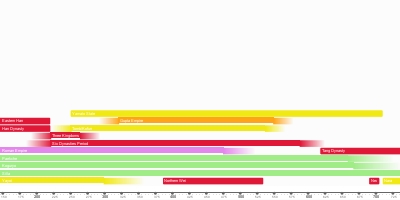
Added to timeline:
Date:
jan 1, 230
jan 1, 420
~ 190 years