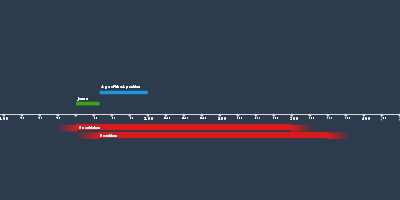
Russian Orthodox Church governed by the Russian Empire (jan 1, 1666 – jan 1, 1917)
Description:
In 1589, the Patriarchate of Constantinople granted autocephalous status to Moscow, the capital of what was now the largest Orthodox Christian polity; the city thereafter referred to itself as the Third Rome—the cultural and religious heir of Constantinople.Until 1666, when Patriarch Nikon was deposed by the tsar, the Russian Orthodox Church had been independent of the State.[110] In 1721, the first Russian Emperor, Peter I, abolished completely the patriarchate and effectively made the church a department of the government, ruled by a most holy synod composed of senior bishops and lay bureaucrats appointed by the Emperor himself. Over time, Imperial Russia would style itself a protector and patron of all Orthodox Christians, especially those within the Ottoman Empire.[111]
For nearly 200 years, until the Bolsheviks' October Revolution of 1917, the Russian Orthodox Church remained, in effect, a governmental agency and an instrument of tsarist rule. It was used to varying degrees in imperial campaigns of Russification, and was even allowed to levy taxes on peasants. The Church's close ties with the state came to a head under Nicholas I (1825-1855), who explicitly made Orthodoxy a core doctrine of imperial unity and legitimacy. The Orthodox faith became further tied to Russian identity and nationalism, while the Church was further subordinated to the interests of the state. Consequently, Russian Orthodox Church, along with the imperial regime to which it belonged, came to be presented as an enemy of the people by the Bolsheviks and other Russian revolutionaries.[112]
Added to timeline:
Date:
jan 1, 1666
jan 1, 1917
~ 251 years