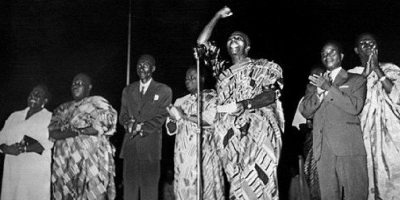
mar 3, 1951 - Nkrumah's CPP comes to power in Gold Coast
Description:
Wiki: With increasing popular backing, the CPP in early 1950 initiated a campaign of "positive action", intended to instigate widespread strikes and nonviolent resistance. When some violent disorders occurred, Nkrumah, along with his principal lieutenants, was promptly arrested and imprisoned for sedition. But this merely increased his prestige as leader and hero of the cause and gave him the status of martyr. In February 1951, the first elections were held for the Legislative Assembly under the new constitution. Nkrumah, still in jail, won a seat, and the CPP won an impressive victory with a two-thirds majority of the 104 seats.The governor, Sir Charles Arden-Clarke, released Nkrumah and invited him to form a government as "leader of government business", a position similar to that of prime minister. Nkrumah accepted. A major milestone had been passed on the road to independence and self-government. Nonetheless, although the CPP agreed to work within the new constitutional order, the structure of government that existed in 1951 was certainly not what the CPP preferred. The ministries of defence, external affairs, finance, and justice were still controlled by British officials who were not responsible to the legislature. Also, by providing for a sizeable representation of traditional tribal chiefs in the Legislative Assembly, the constitution accentuated the cleavage between the modern political leaders and the traditional authorities of the councils of chiefs.[9]
The start of Nkrumah's first term as "leader of government business" was marked by cordiality and co-operation with the British governor. During the next few years, the government was gradually transformed into a full parliamentary system. The changes were opposed by the more traditionalist African elements, particularly in Asante and the Northern Territories. This opposition, however, proved ineffective in the face of continuing and growing popular support for a single over-riding concept—independence at an early date.[9]
In 1952 the position of prime minister was created and the Executive Council became the cabinet. The prime minister was made responsible to the assembly, which duly elected Nkrumah prime minister
Added to timeline:
Date:
mar 3, 1951
Now
~ 75 years ago